

Introduction
In an era defined by data-driven decision-making, organizations are rapidly adopting advanced simulation tools to remain competitive and resilient. Among these innovations, digital twin technology stands out as a transformative concept that bridges the physical and digital worlds. By creating a dynamic virtual representation of real-world assets, systems, or processes, businesses gain the ability to analyze, predict, and optimize performance with unprecedented accuracy.
Originally emerging from aerospace and manufacturing research, the concept has evolved into a cross-industry solution supporting everything from predictive maintenance to urban planning. As industries grow more complex and interconnected, the demand for real-time insights continues to rise, making virtual replicas an essential part of modern digital transformation strategies.
This article explores the foundations, architecture, applications, benefits, challenges, and future outlook of this powerful technology, providing a comprehensive understanding suitable for decision-makers, engineers, and strategists alike.
Understanding the Concept of Digital Twins
A digital twin is more than a static 3D model or simulation. It is a continuously updated virtual entity that mirrors the behavior, condition, and performance of its physical counterpart. Data flows bidirectionally between the physical object and its digital representation through sensors, Internet of Things platforms, and analytics engines.
Digital twin technology enables organizations to run experiments, simulate scenarios, and identify inefficiencies without interrupting real-world operations. This capability fundamentally changes how systems are designed, operated, and improved over time.
At its core, the technology relies on accurate data acquisition, advanced modeling techniques, and intelligent analytics. Together, these components allow the digital version to evolve in parallel with the physical asset, maintaining relevance throughout its lifecycle.
Historical Evolution and Industry Adoption
The early roots of digital twin concepts can be traced back to NASA’s space exploration programs, where engineers used mirrored systems to simulate spacecraft behavior during missions. Over time, advancements in computing power, cloud infrastructure, and sensor technology made the concept commercially viable.
Manufacturing was among the first sectors to embrace digital twin technology at scale, using it to optimize production lines and equipment reliability. As data collection became cheaper and more sophisticated, other industries followed, including energy, healthcare, automotive, construction, and logistics.
Today, digital twins are no longer limited to individual machines. Entire factories, supply chains, and even cities can be digitally replicated to improve planning, sustainability, and risk management.
Core Components and System Architecture
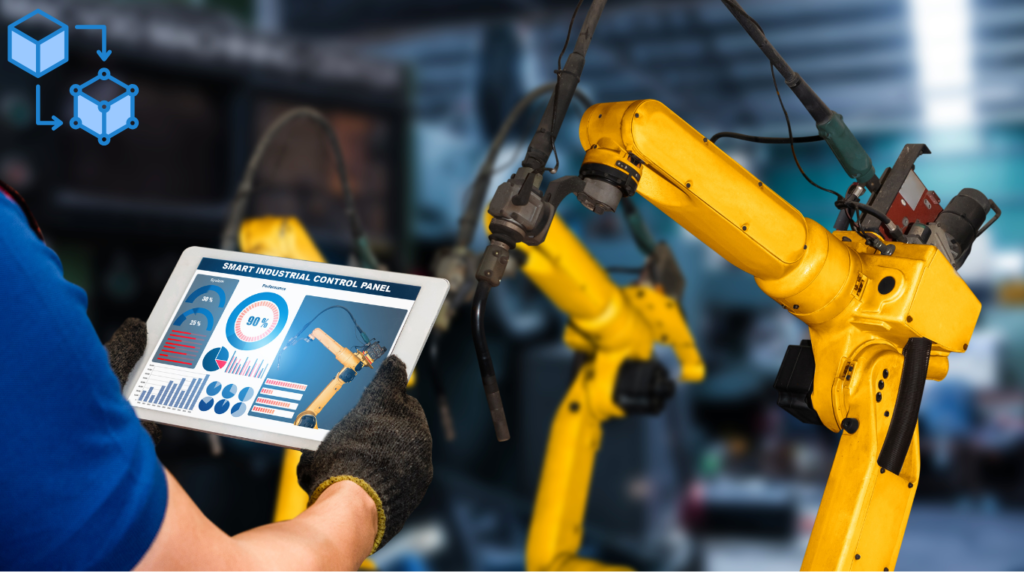
A functional digital twin system is built on several interconnected layers that work together seamlessly. The physical layer consists of the real-world asset equipped with sensors that capture operational data such as temperature, vibration, pressure, and usage patterns.
This data is transmitted to a data integration layer, often supported by cloud platforms and edge computing solutions. Here, information is cleaned, standardized, and prepared for analysis. The modeling layer then uses physics-based models, machine learning algorithms, or hybrid approaches to simulate real-world behavior.
Finally, the visualization and analytics layer presents insights through dashboards, alerts, and predictive reports. This layered architecture ensures that digital twin technology remains scalable, adaptable, and accurate across diverse use cases.
Applications Across Key Industries
The versatility of digital twins has led to widespread adoption across multiple sectors. In manufacturing, virtual replicas of machinery allow engineers to detect wear and tear before failures occur. This proactive approach reduces downtime and extends asset life.
In healthcare, patient-specific digital models are being explored to simulate treatment outcomes and improve personalized care. Urban planners use digital twins of cities to manage traffic flow, energy consumption, and emergency response strategies.
Energy companies apply the technology to monitor power plants, wind farms, and grids, ensuring efficient resource utilization. Across these applications, digital twin technology acts as a decision-support system, enhancing both operational efficiency and strategic planning.
Table 1: Industry Applications and Primary Objectives
| Industry Sector | Digital Twin Application Focus | Primary Objective |
|---|---|---|
| Manufacturing | Equipment and process modeling | Predictive maintenance |
| Healthcare | Patient and device simulation | Personalized treatment |
| Energy | Asset and grid monitoring | Operational efficiency |
| Construction | Building lifecycle modeling | Risk reduction |
| Smart Cities | Infrastructure and mobility | Sustainability planning |
Benefits and Strategic Value
Organizations adopting digital twins experience a wide range of tangible benefits. One of the most significant advantages is improved decision-making driven by real-time data and predictive analytics. Leaders can evaluate multiple scenarios before committing resources, reducing uncertainty and financial risk.
Another major benefit lies in operational efficiency. By identifying bottlenecks and inefficiencies virtually, companies can implement improvements without disrupting ongoing operations. This capability accelerates innovation cycles and shortens time-to-market.
Digital twin technology also supports sustainability goals by optimizing energy usage, reducing waste, and extending asset lifespans. These improvements not only lower costs but also align with environmental and regulatory expectations.
How Digital Twins Improve Decision-Making
Digital twins enhance decision-making by combining real-time data with predictive models, allowing organizations to test scenarios virtually and reduce operational risk before implementing changes.
Data Analytics, AI, and Real-Time Insights
The effectiveness of a digital twin depends heavily on its ability to process and interpret large volumes of data. Advanced analytics and artificial intelligence play a crucial role in transforming raw sensor data into actionable insights.
Machine learning algorithms enable the system to learn from historical patterns and improve predictions over time. This adaptive capability ensures that the digital model becomes more accurate as additional data is collected.
Real-time processing allows organizations to respond immediately to anomalies or performance deviations. In high-risk environments such as energy production or healthcare, this responsiveness can prevent costly failures and enhance safety outcomes.
Challenges and Limitations
Despite its advantages, implementing digital twin technology is not without challenges. One of the primary obstacles is data quality. Inaccurate or incomplete data can compromise the reliability of the virtual model, leading to flawed insights.
Integration complexity is another concern, especially in legacy environments where systems were not designed for interoperability. Establishing seamless data flows across platforms often requires significant investment in infrastructure and expertise.
Cybersecurity also poses a critical challenge. As digital twins rely on continuous data exchange, protecting sensitive information from unauthorized access becomes essential. Addressing these challenges requires careful planning, governance, and ongoing monitoring.
Table 2: Key Challenges and Mitigation Strategies
| Challenge Area | Description | Mitigation Approach |
|---|---|---|
| Data Quality | Incomplete or inaccurate inputs | Sensor calibration and validation |
| System Integration | Legacy system incompatibility | Middleware and APIs |
| Security Risks | Exposure of sensitive data | Encryption and access control |
| Cost Management | High initial investment | Phased implementation |
| Skill Gaps | Lack of technical expertise | Training and partnerships |
Why Data Accuracy Matters in Digital Twins
Accurate data is the foundation of effective digital twins, ensuring that simulations reflect real-world behavior and deliver reliable insights for operational and strategic decisions.
Economic Impact and Return on Investment
From a financial perspective, the value of digital twins lies in their ability to reduce costs while increasing productivity. Predictive maintenance alone can significantly lower repair expenses and minimize unplanned downtime.
Improved product quality and faster innovation cycles further enhance revenue potential. By identifying design flaws early in the development process, organizations avoid costly revisions and recalls.
While the initial investment may be substantial, long-term returns often justify the expenditure. As adoption grows, economies of scale and technological advancements continue to lower barriers to entry for smaller organizations.
Future Trends and Innovation Outlook
Looking ahead, the evolution of digital twins will be shaped by advancements in artificial intelligence, edge computing, and immersive visualization technologies. More autonomous and self-learning models are expected to emerge, reducing the need for manual intervention.
The convergence of digital twin technology with augmented and virtual reality will enhance visualization and training experiences. Engineers and operators will interact with virtual environments that closely mirror real-world conditions.
As regulatory frameworks and standards mature, interoperability between platforms will improve, accelerating adoption across industries and regions.
The Future of Digital Twin Innovation
Future digital twins will integrate AI, real-time analytics, and immersive visualization to create more autonomous, scalable, and intelligent virtual systems.
Conclusion
Digital twin technology has evolved from a specialized engineering concept into a cornerstone of modern digital transformation. By enabling real-time insight, predictive analysis, and virtual experimentation, it empowers organizations to operate smarter, safer, and more sustainably.
As data ecosystems mature and technologies converge, the role of digital twins will continue to expand. Organizations that invest strategically and address implementation challenges proactively will be well-positioned to unlock long-term value.
In a world where complexity and uncertainty are the norm, the ability to understand and optimize systems virtually is no longer optional. Digital twin technology represents not just a tool, but a new way of thinking about how physical and digital realities interact to drive innovation and growth.
Read More:- AI Technology: Transforming the Future of Digital Innovation