

Introduction
Digital transformation is no longer a choice in 2026; it is a must. Businesses in all fields need systems that can grow, are safe, and are always available to run applications, store data, and service consumers throughout the world. Cloud computing architecture is the structural framework that determines how cloud components work together to provide computing services quickly and reliably. This is the main part of this change.
Resilience is now the most important trait of current cloud platforms. Downtime, security breaches, and performance problems can cost money and hurt your brand. It’s important to build systems that can handle errors, grow and shrink as needed, and recover rapidly.
This in-depth guide looks at how to build a cloud computing architecture that can withstand failures in 2026. It covers fundamental components, deployment strategies, best practices, new technologies, and future trends.
What is Cloud Resilience in 2026?
In cloud environments, resilience means that systems can keep providing good service even when there are problems, interruptions, or unexpected loads. Modern businesses work in dispersed ecosystems where services run on many devices, geographies, and platforms.
Key Demands on Modern Cloud Infrastructure
The cloud infrastructure of today must be able to handle:
-
More and more risks to cybersecurity
-
Quick surges in traffic
-
Workloads that are spread out and complicated
-
Strict rules and regulations
-
User bases around the world
A well-planned cloud computing architecture makes sure that things keep running, can change, and are safe, all while getting the best price and performance.
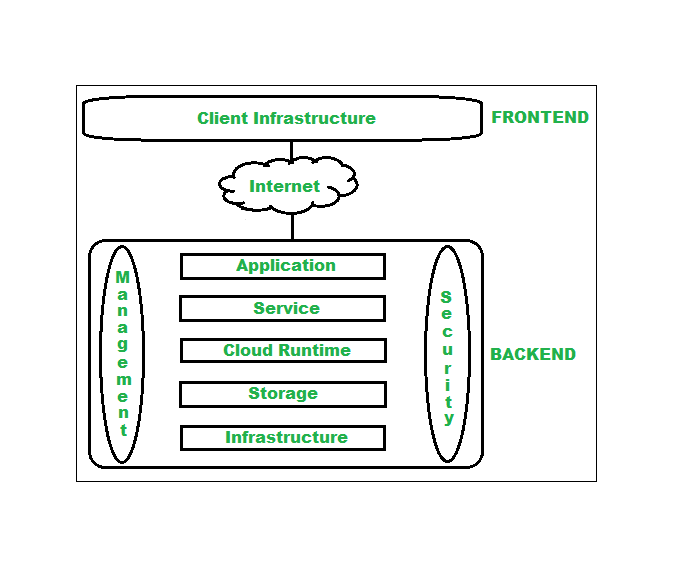
Main Parts of Cloud Architecture
Before making a system that can handle stress, you need to know the basic building pieces.
1. The Front-End Layer
This covers user interfaces, client devices, browsers, and apps that work with cloud services.
2. The Back-End Layer
The back-end is made up of servers, databases, storage systems, and virtualization software that run apps.
3. Containers and Virtualization
Virtual machines (VMs) and containers hide hardware resources from the user, making it possible to move and scale workloads.
4. The Network Infrastructure
Load balancers, gateways, DNS services, firewalls, and content delivery networks (CDNs) are all part of cloud networking.
5. Systems for Storing
You can put cloud storage into these groups:
-
Storage for objects
-
Storage in blocks
-
Storage of files
6. Tools for Managing and Monitoring
Automation tools, monitoring systems, and orchestration platforms make sure that dispersed systems are easy to see and control.
Deployment Models in 2026
Organizations choose deployment methods based on their needs for compliance, scalability, and operations.
Deployment Model Comparison
| Deployment Model | Description | Best For | Resilience Level |
|---|---|---|---|
| Public Cloud | Services that are available online | Startups and apps that can grow | High (if in more than one region) |
| Private Cloud | Infrastructure that is only for you | Industries that are regulated | Very High |
| Hybrid Cloud | A mix of public and private businesses | Enterprises | High |
| Multi-Cloud | Multiple cloud providers | Risk distribution | Very High |
More and more businesses are using hybrid and multi-cloud strategies to avoid being locked into one vendor and improve redundancy.
Important Ideas for Resilient Design
To build a strong cloud computing architecture, you need to follow these tried-and-true design rules:
1. High Availability
To get rid of single points of failure, use more than one availability zone and load balancer.
2. Fault Tolerance
Even if one part breaks, systems must still work.
3. Flexibility and Scalability
Auto-scaling systems automatically give out resources based on how much is needed.
4. Backup
Copy data and services to more than one area.
5. Being Able to See (Observability)
Set up centralized tracing, logging, and monitoring.
Architecture: Resilient Design at a High Level
Below is a basic example of a multi-region design that can handle failures:
↓
Global Load Balancer
↓
Region A (Primary) —- Region B (Failover)
↓ ↓
Auto-Scaling Group Auto-Scaling Group
↓ ↓
Database (Primary) ←→ Database (Replica)
↓
Backup Storage (Cross-Region)
This setup makes sure that traffic immediately moves to Region B if Region A goes down.
First, Safety
Security is one of the most important parts of modern cloud computing design.
The Zero-Trust Model
Don’t trust any user or system until you can prove it.
Encryption
Put data in a secure form:
-
At rest
-
In transit
-
In backup
Identity and Access Management (IAM)
Use multi-factor authentication (MFA) with role-based access control (RBAC).
Auditing on a Regular Basis
Do penetration testing and vulnerability assessments.
Planning for Disaster Recovery
Disaster recovery (DR) makes sure that a firm can keep going.
Metrics for Recovery
-
RTO (Recovery Time Objective) is the longest time that downtime is okay.
-
RPO (Recovery Point Objective) is the most data loss that is acceptable.
Plans for DR
-
Make a backup and restore it
-
Pilot light
-
Warm standby
-
Configuration that is active-active
Active-active versions are the most durable.
The Role of New Technologies
Kubernetes and Container Orchestration
Container orchestration makes sure that things may be moved around and that they can grow automatically.
Computing Without Servers
Serverless makes it easier to manage infrastructure.
Monitoring with AI
Before they happen, artificial intelligence can predict system failures.
Computing at the Edge
Edge cuts down on latency by processing data closer to where consumers are.
Best Practices for 2026
-
Use Infrastructure as Code (IaC)
-
Use CI/CD pipelines that run on their own
-
Use chaos engineering
-
Keep an eye on performance all the time
-
Plan for things to go wrong from the start
Resilience isn’t something you think about later; it’s built into every part of cloud computing architecture.
Cutting Costs Without Losing Resilience
Resilience needs to fit within financial limits.
Plans:
-
Make workloads the right size
-
Use instances that are available right now
-
Set up auto-scaling
-
Keep an eye on resources that aren’t being used
Long-term sustainability depends on finding a balance between cost and availability.
Governance and Compliance
Regulations like GDPR and standards that are specific to a sector require strong oversight.
Ways to Govern:
-
Control of data residency
-
Automating the enforcement of policies
-
Logging for audits
-
Monitoring access
A strong cloud computing architecture includes compliance from the start, not as a last resort.
Problems That Happen a Lot in 2026
1. More Complicated
Advanced orchestration is needed for distributed systems.
2. Cybersecurity Risks
Ransomware and sophisticated persistent threats are changing.
3. Locking in a Vendor
Multi-cloud techniques lower the hazards of being dependent on one cloud.
4. Problems with Performance
If resources aren’t used properly, it can hurt the user experience.
Sample Architecture Table: Parts That Make It Resilient
| Layer | Tool/Method | Purpose |
|---|---|---|
| Compute | Auto Scaling | Deal with traffic surges |
| Network | Load Balancer | Distributes traffic |
| Data | Replication | Stop losing data |
| Security | IAM + MFA | Control of access |
| Monitoring | Tools for Observability | Find strange things |
Green Cloud and Sustainability
Being responsible for the environment is changing IT strategies.
Companies are focusing on:
-
Data centers that use less energy
-
Scheduling workloads with carbon in mind
-
Optimizing resources
Planning for resilient cloud computing architecture now includes green objectives.
Looking Ahead
The future of cloud infrastructure includes:
-
Self-healing systems that work on their own
-
Integrating quantum computing
-
Infrastructure that is completely run by AI
-
Global networks with very low latency
Cloud resilience will shift from reactive recovery to predictive and automated prevention.
Conclusion
As companies grow their online presence, it becomes more important than ever to create systems that can withstand stress. A well-thought-out cloud computing architecture makes sure that it is scalable, secure, always available, and cost-effective.
In 2026, being resilient is no longer a benefit; it’s something that everyone expects. Businesses that put automation, redundancy, security, and smart monitoring at the top of their lists will do well in digital ecosystems that are getting more complicated.
Businesses can develop cloud systems that can handle disruptions, adapt to change, and keep doing well by using best practices, contemporary tools, and planning ahead.
Thoughtful design and ongoing improvement are the first steps on the road to resilience. Putting money into cloud computing architecture now will make sure that your business runs smoothly and is ready to innovate in the future.
Read More:-Types of Cloud Computing: Public, Private and Hybrid Guide